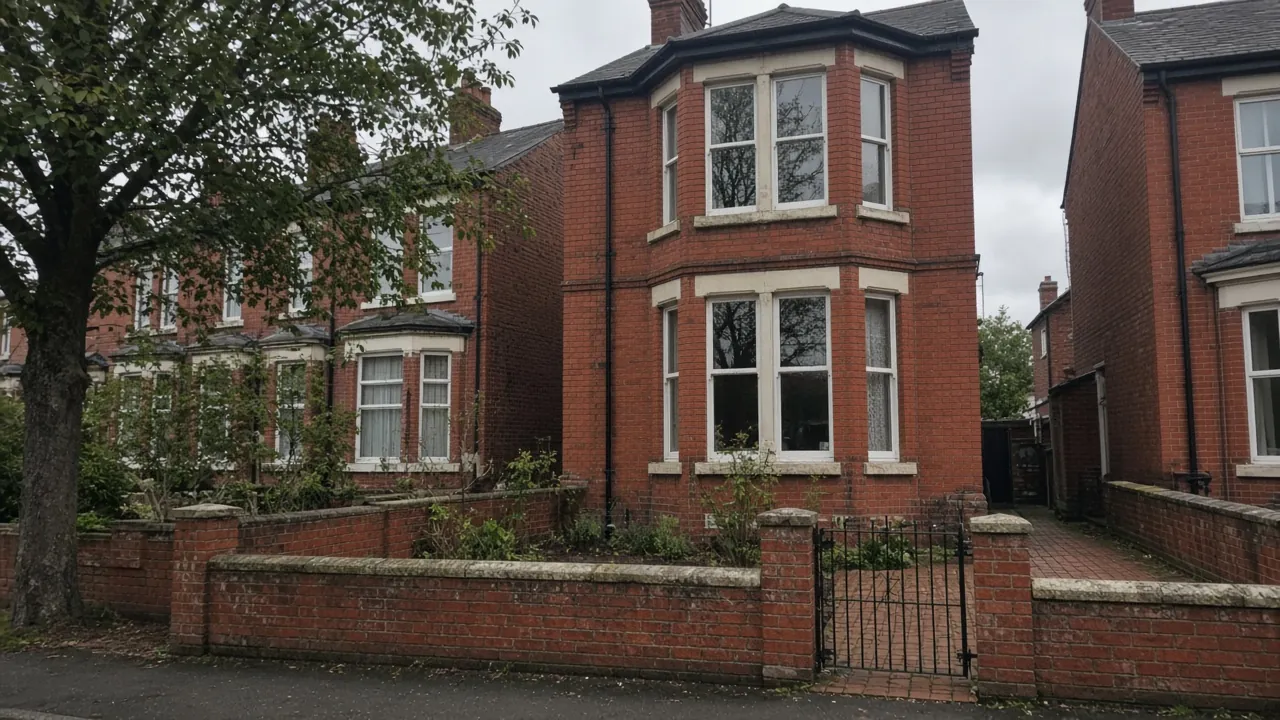
Can a Linthorpe house have a driveway?
Linthorpe, in the TS5 postcode just south-west of the town centre, grew in the late nineteenth and early twentieth century as Middlesbrough expanded. Its streets were laid out for walking and trams, not cars. That shapes almost every driveway conversation here.
Terraced streets. Many Linthorpe terraces have either no front garden or a small walled yard of a couple of metres. To park legally, a car must sit wholly on your land without overhanging the pavement, and the council has to agree to a dropped kerb. A typical car is around 4.2m to 4.8m long, so a front yard much shorter than about 5m usually cannot take a car properly, whatever surface you lay. If your yard is too short, a well-laid path, bin store or small garden may be a better use of the money.
Larger semis and villas. The bigger Edwardian and Victorian houses, especially in the quieter roads near Albert Park and The Avenue, often have deep front gardens with boundary walls, gate piers and mature planting. These can take a driveway, but in a conservation area removing the wall or front garden may need permission, and the design should respect the house.
Back lanes. Some streets have rear lanes where owners park in a yard or garage at the back. Rear hardstandings can be a good alternative to a front drive. Check whether the lane is adopted or private, and whether you have a right of way.
Before getting quotes, it helps to:
- Measure the front garden from the house wall (or bay) to the back of the pavement.
- Check for street trees, lamp posts and utility covers where a dropped kerb would go.
- Check whether your street is in a conservation area (see below).
- Look at your neighbours. If similar houses on your street already have approved crossings, that is a useful sign, though every application is judged on its own merits.
A survey can confirm whether a car will fit, how the levels work against the house and pavement, and what the council is likely to look at.
How much does a driveway cost in Linthorpe?
Linthorpe drives are often small but fiddly. Based on Checkatrade's April 2026 UK averages for supply and installation:
| Surface | Per m² | 15m² front yard | 30m² larger front garden |
|---|---|---|---|
| Gravel | about £60 | about £900 | about £1,800 |
| Tarmac | about £90 | about £1,350 | about £2,700 |
| Block paving | about £100 | about £1,500 | about £3,000 |
| Resin bound | about £120 | about £1,800 | about £3,600 |
Per-m² rates from the Checkatrade driveway cost guide, April 2026; the area columns simply multiply them. Treat these as a minimum guide: small jobs usually cost more per m² because the set-up, skip and labour costs are spread over less area.
Linthorpe-specific costs to expect:
- Access. With no side access on terraces, all the digging and materials go through the front, often by hand and barrow.
- Walls and gate piers. Taking down, rebuilding or reusing a Victorian boundary wall, or reusing its bricks, takes time.
- Old foundations and cellars. Older front yards can hide old walls, coal chutes, cellar lights and pipes. A good survey will check for these.
- Dropped kerb. Middlesbrough Council's 2026/27 fees are £25.50 for an assessment and £173.40 for the licence, plus building the crossing itself. UK guides put a new crossing at around £1,800 on average.
- Planning or conservation consent, if needed.
Which surfaces suit Linthorpe's older houses?
On period houses, the surface should suit the red brick, stone details and boundary walls rather than fight them.
- Clay block paving in reds and browns is a natural fit for Victorian and Edwardian brick, holds its colour for decades and can be laid in herringbone for strength. Concrete blocks in tumbled or brindle finishes are a cheaper alternative. See block paving.
- Resin bound in warm gravel tones gives a smooth, clean finish that sits well against period brick, with a clay or stone border. It is permeable, which helps with drainage on small sites with nowhere else for water to go. See resin driveways.
- Gravel with a stone or brick edge can look right on larger villa gardens, especially behind retained walls and gate piers. Use a stabilising grid and a solid strip at the pavement edge. See gravel driveways.
- Tarmac is practical, but it looks plainer on period houses. Edged in clay or stone it can work well on rear hardstandings. See tarmac driveways.
Where only part of a front yard can be used for parking, combine surfaces: a hard parking strip with planting or gravel around it keeps some greenery, helps drainage and often looks better on a period street.
Conservation areas, planning and dropped kerbs in Linthorpe
Conservation areas. Middlesbrough Council lists two conservation areas that cover parts of this side of town: Linthorpe and Albert Park and Linthorpe Road. In conservation areas, extra planning controls can apply to demolishing boundary walls, changing front gardens and other alterations that would normally be permitted, and some areas have Article 4 directions that remove certain permitted development rights. If your home is in or near either area, speak to Middlesbrough Council's planning team before removing a front wall, hedge or garden. Albert Park, opened in 1868, gives the streets around it much of their character.
Front-garden surfaces. Outside these extra controls, the national rule still applies: more than five square metres of impermeable surface on a front garden that drains onto the road needs planning permission. Resin bound, gravel and permeable block paving avoid that, as does draining the water into your own garden.
Dropped kerbs. A new crossing needs a vehicle pavement crossing licence from Middlesbrough Council before any work. Contact highwaylicences@middlesbrough.gov.uk. The council considers whether there is room to park off the pavement, visibility, street trees, lamp posts and services. If your house is on a main road such as Linthorpe Road, also ask whether the crossing needs planning permission. More detail is on our dropped kerbs page.
Areas near Linthorpe
Nearby areas with their own pages include Acklam to the south-west, Marton to the south-east and Brookfield to the south, plus Nunthorpe and Coulby Newham further south. Across the Tees valley, Thornaby and Stockton-on-Tees are a short drive west. Each area has its own page covering local housing and rules.
Questions people ask
Can I get a driveway at my terraced house in Linthorpe?
Only if the front yard is deep enough for a car to park fully off the pavement, usually about 5m or more, and Middlesbrough Council approves a dropped kerb. In a conservation area you may also need planning permission to remove a front wall.
Do I need planning permission to remove my front wall in Linthorpe?
In the Linthorpe or Albert Park and Linthorpe Road conservation areas, demolishing a boundary wall can need permission. Outside them, low walls can usually be removed. Check with Middlesbrough Council first.
What surface looks best on a Victorian house?
Clay block paving in reds and browns, or resin bound in warm gravel tones with a brick or stone border, usually suit Victorian and Edwardian brick best.
How much is a small front-yard driveway?
On 2026 UK averages, a 15m² area costs from about £900 in gravel to about £1,800 in resin, before walls, the dropped kerb and access costs. Small jobs often cost more per m².
Will the council approve a dropped kerb on my street?
It depends on the depth of your front garden, visibility, street trees, lamp posts and services. Middlesbrough Council assesses each request; the 2026/27 assessment fee is £25.50.
Is a rear hardstanding an option?
Often, if your back yard opens onto a lane you have a right to use. Check whether the lane is adopted and whether any crossing is needed.