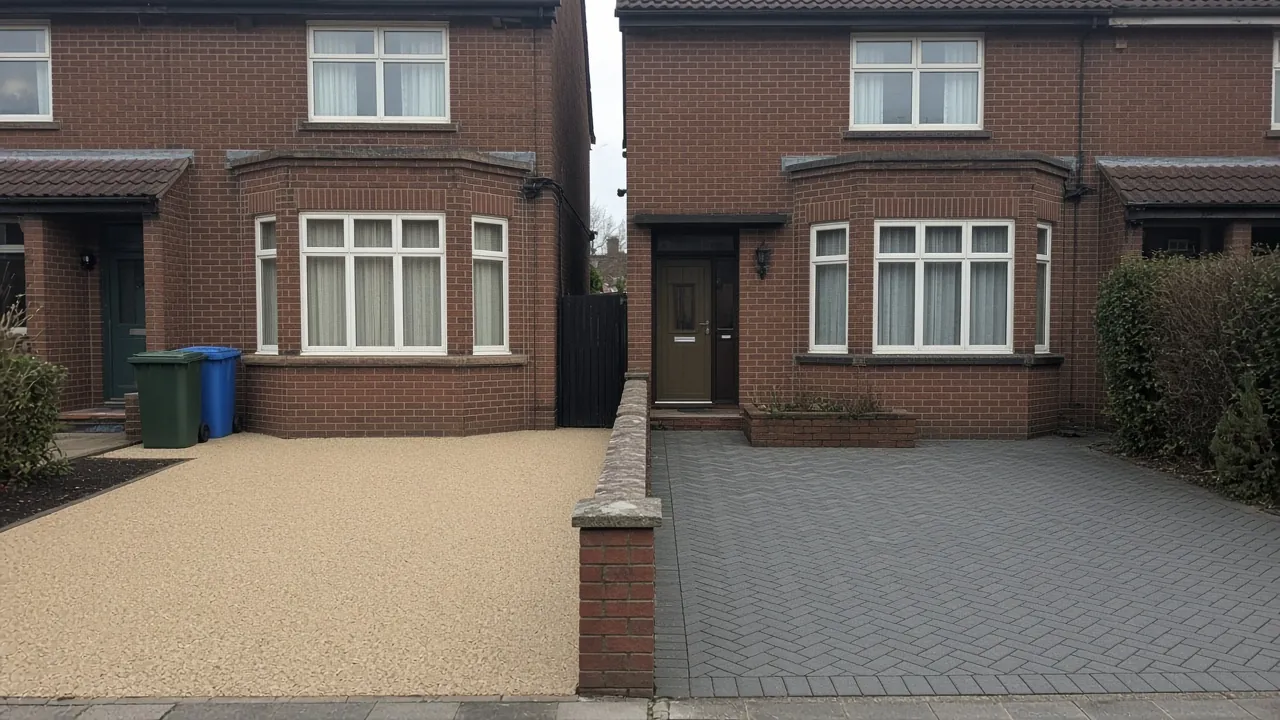
Resin and block paving side by side
Resin bound is a mix of natural aggregate and clear resin, trowelled by hand into a smooth, seamless surface about 15mm to 20mm thick. It is laid over a stable, porous base, usually open-graded tarmac or concrete. Because the stones are bound together with gaps between them, water drains straight through. It is different from resin bonded, where loose stone is scattered onto a resin coating on a solid base; bonded surfaces are not permeable and have a rougher, gravel-like texture.
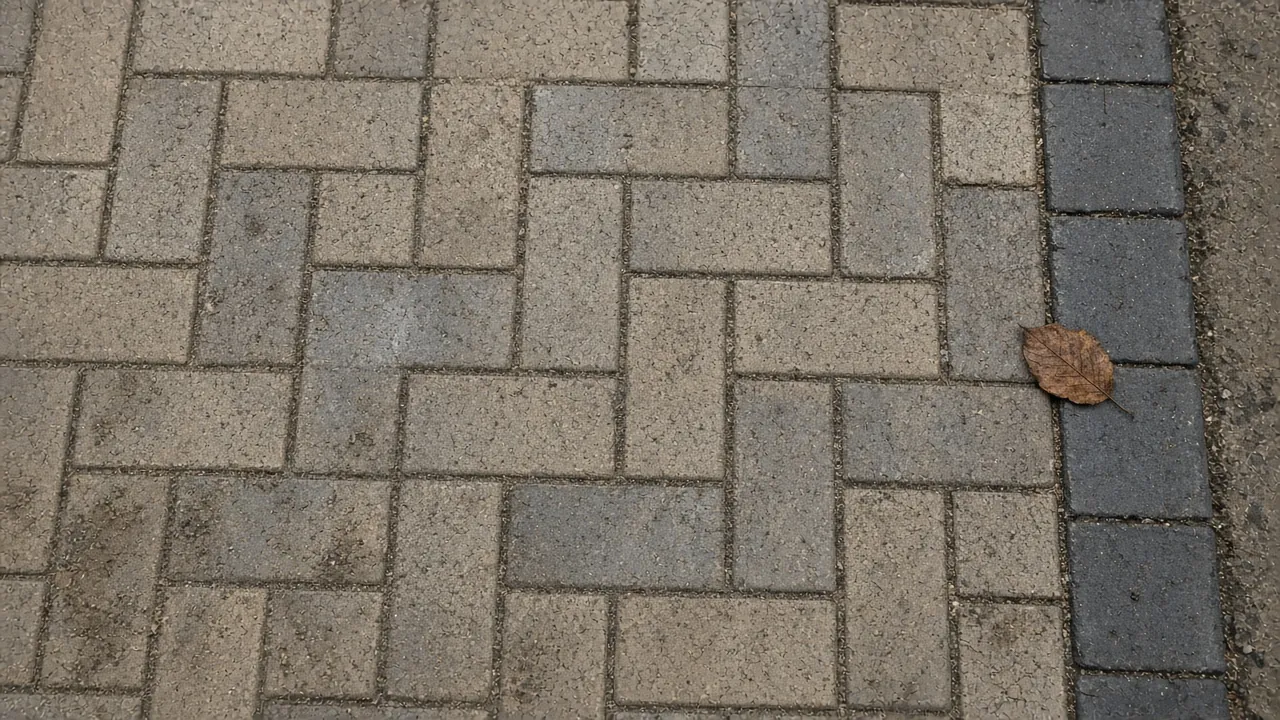
Block paving is individual concrete or clay blocks, usually 50mm thick for driveways, laid on a bed of sharp sand over a compacted sub-base, with kiln-dried sand brushed into the joints. Standard blocks are not porous, so water runs off the surface. Permeable block paving has wider joints filled with fine grit and an open-graded base, so water drains down between the blocks.
| Resin bound | Block paving | |
|---|---|---|
| Typical cost (Checkatrade, April 2026) | about £120 per m² | about £100 per m² |
| Two-car drive (50m²) | about £6,000 | about £5,000 |
| Typical lifespan quoted in industry guides | 15 to 25 years | 20 to 30 years, longer for clay pavers |
| Drainage | Permeable when laid on a porous base | Standard blocks impermeable; permeable versions available |
| Front-garden rule | Usually met without extra drainage | Needs permeable blocks or drainage to your own land |
| Look | Seamless, smooth, natural stone colours | Patterns, borders, many colours and textures |
| Weeds | Few; no joints for seeds to settle | Seeds settle in joints; needs brushing and re-sanding |
| Repairs | Patches can show; hard to match exactly | Individual blocks can be lifted and relaid |
| Use after laying | Usually cars after 24 to 48 hours | Usually straight away once compacted and sanded |
| Weather when laying | Needs dry weather; cannot be laid on a wet base | Can be laid in most weather |
Costs from the Checkatrade driveway cost guide, April 2026. Lifespans are typical figures quoted in installer and industry guides and depend heavily on installation.
Neither surface is better in every case. The right choice depends on your house, your budget, how you use the drive and, most importantly, what is going underneath.
Cost: what you pay up front and later
On Checkatrade's April 2026 averages, block paving is about £20 per m² cheaper than resin: roughly £5,000 against £6,000 for a 50m² two-car drive. The breakdown is about £50 materials and £50 labour per m² for blocks, and about £70 materials and £50 labour for resin.
The real price difference depends on the job:
- Existing base. Resin can sometimes be laid over a sound, well-drained existing tarmac or concrete drive, which avoids a full dig-out and can make resin the cheaper option. Block paving almost always needs a fresh sub-base and sand bed.
- Complexity. Herringbone block paving with lots of cuts, curves and borders takes longer. Resin flows into curves easily, but steps and edges still take time.
- Drainage. Standard block paving on a front garden needs drainage to your own land or permeable blocks. Resin on a porous base often needs nothing extra. That can close the gap.
- Materials. Clay pavers, premium concrete blocks and UV-stable resin with premium stone all sit at the top of each range.
Long-term costs. Block paving needs occasional re-sanding of joints, weed control and sometimes a clean and re-seal. Damaged areas can be lifted and relaid, often reusing the same blocks. Resin needs regular sweeping and a gentle pressure-wash a couple of times a year to keep the pores open. Damage is harder to repair invisibly, and colours can be difficult to match in a patch. Checkatrade puts professional driveway cleaning at around £8.50 to £15.50 per m², whichever surface you have.
How each copes with Teesside weather and ground
Much of Middlesbrough and the surrounding towns sits on heavy clay, with a coastal climate on the Redcar side.
Clay ground. Neither surface can make clay drain faster. Permeable resin or permeable blocks let water through the surface, but if the ground beneath cannot take it, the water has to go somewhere: a deeper free-draining sub-base, a soakaway or an overflow. A good installer will plan this rather than assume the surface solves it. See our drainage guide.
Movement. Clay shrinks and swells a little with the seasons. Block paving is flexible and tolerates small movements; if it settles, it can be lifted and relaid. Resin is a continuous layer and relies on its base being stable. Cracks in an old base can show through resin laid on top.
Frost. Water trapped in a surface and then frozen does damage. Both surfaces handle frost well when they drain properly. Problems come when water sits in a poorly drained sand bed or a clogged resin surface.
Sun and salt. Lighter resin colours need UV-stable resin to avoid yellowing. Near the coast, blown sand can clog resin pores and work into block joints; both need regular sweeping.
Laying in wet weather. Resin cannot be laid on a wet base or in rain, so autumn and winter jobs can be pushed back by a run of wet days. Block paving can be laid in most weather.
Which suits which home?
Choose block paving if:
- You have a Victorian, Edwardian or 1930s brick house and want clay pavers or tumbled blocks that match it, as in Linthorpe or Acklam.
- You may need to dig up part of the drive later, for example for a new drain, a car charging cable or tree roots.
- You want patterns, borders and the option of extending in stages.
- You want to use the drive immediately after it is finished.
- You want the lowest cost of the two on a new build-up.
More on block paving.
Choose resin bound if:
- You want a seamless, modern look with no joints to weed, popular on detached and modernised homes in places like Marton, Nunthorpe and Ingleby Barwick.
- You want a permeable front-garden surface without separate drainage.
- You have a sound existing base that resin can go over.
- Accessibility matters: a smooth resin surface is easier for wheelchairs, pushchairs and wheelie bins than gravel, and has no lips between blocks.
More on resin driveways.
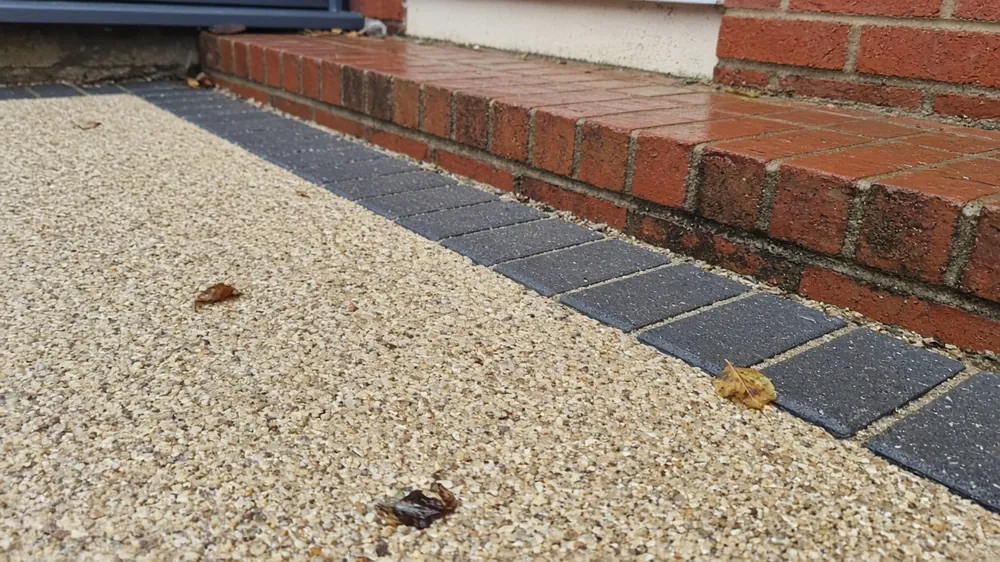
Or combine them. A resin drive with a block paving border or apron is a common and practical compromise. The blocks give a strong edge where tyres turn at the road, and the resin gives the seamless finish across the middle.
Whatever you choose, ask installers exactly what will go underneath. A resin drive on a cheap base, or block paving on a thin sand bed over soil, will fail early. The survey and the build-up matter more than the surface.
Questions people ask
Is resin more expensive than block paving?
Usually, by about £20 per m² on Checkatrade's 2026 averages: around £120 for resin bound against £100 for block paving. Laying resin over a sound existing base can close or reverse the gap.
Which lasts longer, resin or block paving?
Industry guides typically quote 20 to 30 years for block paving and 15 to 25 years for resin bound. The quality of the base and installation decides where in those ranges a drive ends up.
Is resin or block paving better for drainage?
Resin bound on a porous base is permeable as standard. Block paving is only permeable if you choose a permeable system; standard blocks need drainage to your own land on a front garden.
Which needs less maintenance?
Resin, as there are no joints for weeds. It still needs sweeping and occasional pressure-washing. Block paving needs joint re-sanding and weed control from time to time.
Can resin be laid over block paving?
It is not usually recommended, because the blocks can move and the sand bed is not a stable base. Most installers lift the blocks and lay a suitable porous base first.
Which is easier to repair?
Block paving. Damaged blocks can be lifted and replaced or relaid. Resin patches are possible but often show, because matching the colour and texture exactly is difficult.