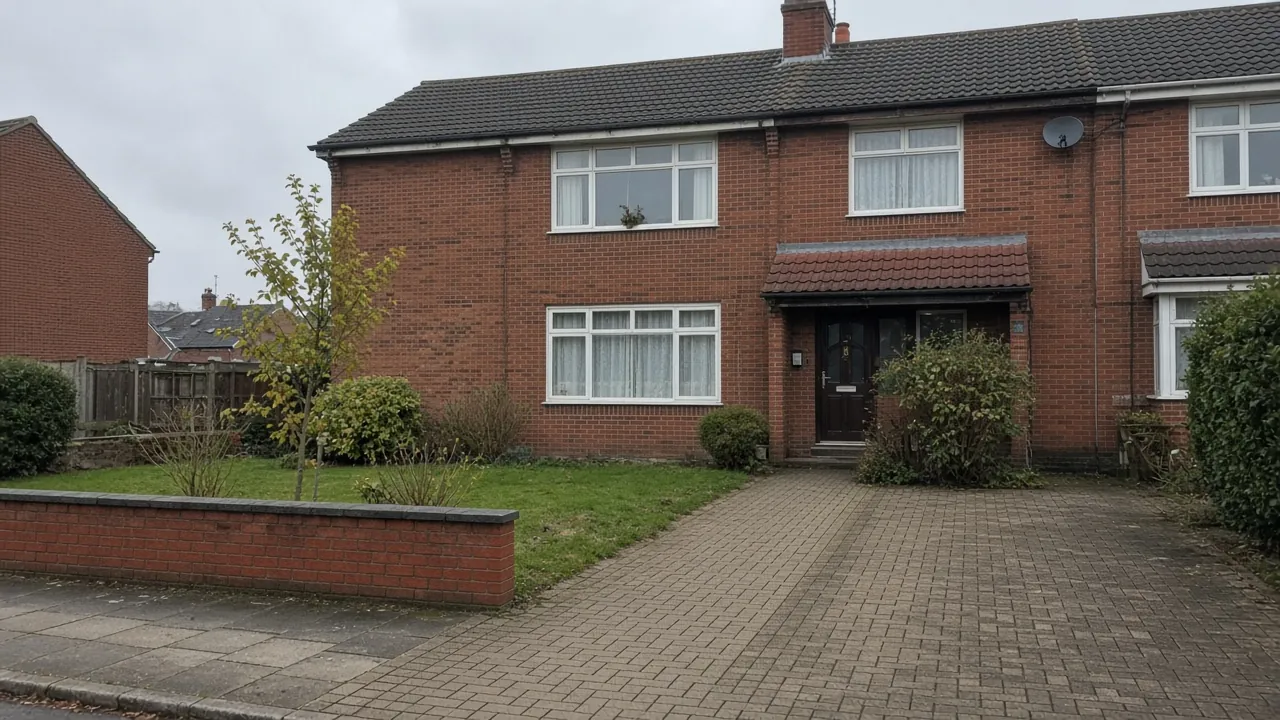
What widening a driveway involves
There are three parts to most widening jobs, and people often think about only the first.
1. The extra parking area. Usually part of the front lawn or a border, sometimes a front wall or hedge. It has to be dug out, given a sub-base to the same standard as a new drive and surfaced.
2. The join with the existing drive. New and old surfaces have to meet at the same level and drain properly. If the old drive is worn or built on a thin base, it can be better to redo the whole area than to bolt new onto failing old.
3. The access from the road. If your car needs to cross the pavement or verge at a new point, or your crossing needs to be wider to reach a second space, the dropped kerb has to be extended. That needs the council's consent before any work.
Before you plan, measure:
- Width. A comfortable double drive side by side is usually around 5.5m to 6m wide, so you can open doors between cars. Narrower than that and it becomes a squeeze.
- Depth. A typical car is around 4.2m to 4.8m long. Each space needs room to park without overhanging the pavement, and without blocking the front door or bins.
- The crossing. Look at the existing dropped kerb. Will the new space be reachable from it, or does it need extending? Is there a lamp post, street tree, telegraph pole or inspection cover in the way?
Tandem parking, one car behind the other, avoids widening the kerb but means shuffling cars. Side-by-side parking is easier to live with but usually needs a wider crossing.
How much does widening a driveway cost?
The extra area. On Checkatrade's April 2026 UK averages, new driveway surfaces cost about £60 per m² for gravel, £90 for tarmac, £100 for block paving and £120 for resin bound, including materials and labour. Adding a 15m² second space would therefore be roughly:
| Surface | Per m² | 15m² extra space | 25m² extra area |
|---|---|---|---|
| Gravel | about £60 | about £900 | about £1,500 |
| Tarmac | about £90 | about £1,350 | about £2,250 |
| Block paving | about £100 | about £1,500 | about £2,500 |
| Resin bound | about £120 | about £1,800 | about £3,000 |
Per-m² rates from the Checkatrade driveway cost guide, April 2026; the area columns multiply them.
Why extensions often cost more. Checkatrade's guide notes that extending an existing driveway typically costs £100 to £250 per m², more than a new drive, because the whole area often needs to be overlaid to avoid visible joins. Small extensions also carry the same set-up costs as bigger jobs.
The dropped kerb. If the crossing needs widening:
- Middlesbrough Council: £25.50 assessment and £173.40 licence for 2026/27, each with 14 days' notice.
- Redcar and Cleveland Council: apply online; crossings are built at the applicant's expense by the council or its approved contractors. No fee is published on the application page.
- Stockton-on-Tees Borough Council: apply for a council quote, or use a private contractor who meets its criteria and holds an Opening Up licence.
- North Yorkshire Council: £310.20 domestic licence with an approved contractor, or £102.36 for a council quote.
On construction, Checkatrade's 2026 guide puts widening an existing crossing at around £1,100, against around £1,800 for a new one.
Other extras. Removing a front wall or hedge, a retaining wall where the lawn is higher than the drive, a channel drain or soakaway, and moving an inspection cover to the new level.
Matching old and new
How you treat the join decides how the finished drive looks.
Block paving. Blocks vary between batches and weather over time, so a perfect match to a drive that has been down for years is unlikely. Options:
- Lift and relay the whole drive with a mix of old and new blocks spread evenly, if the old blocks are sound.
- Add a deliberate border or band in a contrasting colour that frames the old and new areas, so the difference looks designed.
- Replace the whole surface if the old drive is rutted or sinking anyway.
Tarmac. New tarmac next to old is always visible at first. Resurfacing the whole drive with a new wearing course gives a uniform finish if the old base is sound.
Resin. A seamless join between old and new resin is difficult. Resurfacing the full area, possibly over a sound existing base, usually looks best.
Gravel. The easiest to extend. The new area is built and the whole drive topped up with fresh gravel.
If the old drive is failing, cracked, sinking or puddling, widening is a good time to rebuild everything on a proper base. Paying for a new section next to a drive that will need replacing in a few years rarely makes sense.
More detail on surfaces: block paving, tarmac driveways, resin driveways and gravel driveways.
Rules and checks before you widen
Planning and drainage. Since October 2008, more than five square metres of impermeable surface on a house's front garden that drains onto the road needs planning permission. Widening across a lawn often takes the total over that, so use a permeable surface or drain onto your own land. On Teesside's clay, a soakaway has to be sized properly. See our planning guide and drainage guide.
Conservation areas and covenants. In a conservation area, removing a front wall or hedge can need permission. On some estates, planning conditions or covenants in the deeds restrict changes to open-plan frontages.
Grass verges. Many roads in Acklam, Marton and Nunthorpe have a council grass verge between the footpath and the road. Crossing more verge means a longer crossing, built to the council's specification, and it needs the same consent as any dropped kerb. See Acklam.
Street trees and street furniture. Councils consider trees, lamp posts and other street furniture when assessing crossings. A request that would damage a street tree's roots or need a lamp post moved may be refused or cost much more.
Utilities. Shallow pipes and cables under the pavement may need protecting or lowering, which is arranged with the utility company.
Levels and damp courses. The widened drive should stay at least 150mm below the damp-proof course of the house and should not cover air bricks. Fall it away from the house.
Neighbours. On shared drives or close boundaries, agree the edging, levels and where water will go before work starts.
Main roads. Widening an access onto a classified road can need planning permission as well as highway consent.
Our dropped kerbs page explains each council's crossing process in more detail.
Questions people ask
How much does it cost to widen a driveway?
The extra area costs about £60 to £120 per m² on 2026 UK averages, depending on the surface. Checkatrade notes extensions can run £100 to £250 per m² when the existing drive also needs redoing. Kerb works are extra.
Do I need permission to widen my dropped kerb?
Yes. Any change to a crossing over a public pavement or verge needs the highway authority's consent before work starts, whichever council you are in.
How wide should a double driveway be?
Around 5.5m to 6m lets two cars park side by side with room to open doors. Narrower drives work, but getting in and out is a squeeze.
Can new block paving match my old drive?
Rarely perfectly, because colours vary between batches and weather over time. A contrasting border, or relaying old and new blocks mixed together, usually looks better.
Do I need planning permission to widen my drive?
Usually not, if the new area is permeable or drains onto your own land. Conservation areas, removed permitted development rights and covenants can change that.
Can I widen my drive across the grass verge?
Only with the council's consent. The crossing over the verge must be built to the council's specification by an approved or suitably insured contractor.